Projekt Kategorie Production
H2-Cluster-Heek
The Heek-Epe (HEP) hydrogen pipeline connects the existing pipeline number 13, which is being converted from natural gas to hydrogen transport, with the cavern field in Epe in the district of Borken in North Rhine-Westphalia. The new pipeline has a total length of 11 kilometers and a design pressure of 70 bar. The pipeline construction will connect to RWE Gas Storage West's first hydrogen storage facility in Epe, enabling large-volume hydrogen storage in caverns.
The project is being implemented by OGE (Open Grid Europe) and is part of the development of the core hydrogen infrastructure in North Rhine-Westphalia. The HEP pipeline forms a central link between the supraregional hydrogen transport network and the local storage infrastructure in Epe.
Once completed, it will create an important infrastructure component for the hydrogen economy in the Münsterland region, ensuring the transport and storage of hydrogen between Heek and Epe.
RWE (GET H2 Nukleus)
The GET H2 Nukleus project involves the construction of an electrolysis plant at the site of the Emsland gas-fired power plant in Lingen (Ems), Emsland district, Lower Saxony. The plant will be built in three stages with a total capacity of 300 megawatts (MW). The green hydrogen produced will be transported via a 130-kilometer pipeline network to industrial customers in Lower Saxony and North Rhine-Westphalia.
The project has been nominated as an IPCEI (Important Project of Common European Interest) and is being funded by the German federal government and the state of Lower Saxony.
SALCOS (Salzgitter Low CO2 Steelmaking)

Salzgitter AG is converting its steel production at its Salzgitter site in Lower Saxony to hydrogen. The SALCOS® (Salzgitter Low CO2 Steelmaking) program prevents the generation of CO2 directly in the production process. The first expansion stage consists of a direct reduction plant with an annual capacity of 2 million tons, an electric arc furnace, and a 100 MW electrolysis plant for hydrogen production on the factory premises.
The IPCEI project is being funded with over one billion euros by the German federal government and the state of Lower Saxony.
Production is scheduled to start in the first half of 2027. In the first step, around one-third of production will be converted to the hydrogen-based process. The complete transformation by 2033 is expected to reduce CO2 emissions by over 95 percent.
Lingen Green Hydrogen
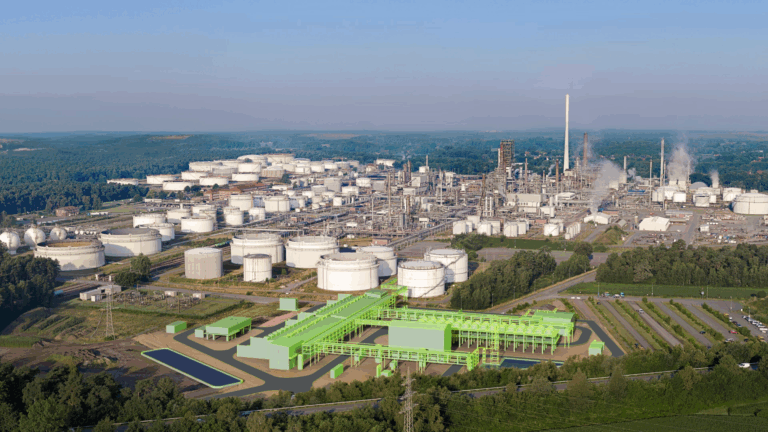
The Lingen Green Hydrogen project involves the construction of a 100 MW electrolysis plant at the Lingen site (Emsland) in Lower Saxony. The plant will be built in the immediate vicinity of the bp refinery and connected directly to the GET H2 Nukleus, which links Lower Saxony with North Rhine-Westphalia. The hydrogen produced will supply the neighboring refinery and regional industrial customers via the core network to the consumer centers in the Marl Chemical Park and the bp refinery in Gelsenkirchen.
The project is being carried out by BP Europa SE. It is funded by the German Federal Ministry for Economic Affairs and Energy and the state of Lower Saxony as part of the IPCEI program Hy2Infra.
Commissioning is planned for the second half of 2027. The electrolysis plant will be powered by offshore wind energy and will produce up to 11,000 tons of green hydrogen annually at a capacity of 100 MW.