Partners
The successful establishment of a nationwide hydrogen infrastructure is the central objective of the GET H2 initiative. The participating companies and institutions are actively driving forward the H2 ramp-up in Germany and making decisive contributions to the planning, development and implementation of a reliable, future-proof infrastructure. Together, the GET H2 partners are continuously working to turn the vision of an integrated, high-performance hydrogen network in Germany into reality step by step.
Supporting Partners
GASCADE Gastransport GmbH connects five countries with its gas pipeline network and guarantees a secure energy supply for Germany and Europe. It is supporting the project in order to provide constructive assistance with the detailed design of the concept and to examine and, if necessary, prepare the expandability of the pipeline system under consideration, particularly towards East Westphalia and southwards to Frankfurt and Ludwigshafen, in cooperation with other partners such as CREOS Deutschland.
OGE lets gas molecules flow. We create and maintain a modern, safe and efficient infrastructure for natural gas, hydrogen and CO2. Our pipeline network, which is over 12,000 kilometres long, is fundamental to Germany’s energy supply and ensures the prosperity of our society. As the market-leading gas network operator, we are pioneers, drivers and enablers of the energy transition and climate neutrality. We see ourselves as transformation consultants and service providers for industry, power plants, distribution network operators and our partners in production and politics. More than 2,000 people find a future-proof and modern workplace at the OGE Group. In the interests of our employees and shareholders, we are continuously adapting our business model to ensure sustainable profitable development.
BP Europa SE employs around 10,500 people in Germany, Belgium, the Netherlands, Austria, Poland, Switzerland and Hungary. The company is headquartered in Hamburg, where its lubricants, aviation and marine businesses are managed. Bochum is BP’s administrative headquarters in Germany and home to the German petrol station brand Aral. This is where BP Europa SE’s supply and distribution units are based. The company also operates refineries and petrol stations in Europe. With around 43 million tonnes of mineral oil products under the Aral, BP and Castrol brands, BP Europa SE covers a large part of Europe’s annual demand. BP has set itself the ambitious goal of becoming climate neutral by 2050 or earlier. This applies in particular to all BP operating activities on an absolute basis, including through a gradual increase in investment in alternative business areas.
With its highly efficient power plants in Germany, the United Kingdom and the Netherlands, RWE Generation’s approximately 3,000 employees produce electricity from gas, hard coal, hydropower and biomass. Its gas-fired power station fleet ranks third in Europe – an excellent starting position, as gas is becoming increasingly important as a bridge to the age of renewable energies. In the Netherlands in particular, the company is focusing on biomass – and is converting two hard coal-fired power plants to use this CO2-neutral energy source. RWE is also represented in many core markets with hydropower.
Thyssengas GmbH is an independent company that connects energy sources from near and far. Every year, we transport up to 10 billion cubic metres of gas safely and environmentally friendly via a 4,200-kilometre underground transport network to where it is needed. At the same time, we connect various sectors of the energy supply into an overall concept. We are convinced that only with a state-of-the-art gas infrastructure can the goals of security of supply and decarbonisation of the energy world be achieved and reconciled. The Thyssengas gas network, combined with hydrogen from wind and solar power or other green gases, provides the energy model for the future.
Nowega GmbH is a transmission system operator based in Münster. The subsidiary of Erdgas Münster GmbH operates, maintains and markets around 1,500 kilometres of high-pressure gas pipelines. The pipeline network stretches from the Dutch border across Lower Saxony and parts of North Rhine-Westphalia to the Wendland region and is part of the intra-European transport routes for natural gas.
H2 Green Power & Logistics GmbH is a company based in Münster that is responsible for project development, corporate development, purchasing/import and distribution of hydrogen. The hydrogen economy is based on the electrolysis plants in Magdeburg and Marl. H2 distribution is carried out in four modes: road, rail, power-to-gas applications and inland waterway transport between Duisburg, Berlin, Hamburg and Wilhelmshaven (where an H2 import terminal is under development). In addition, there are sustainability projects and facilities, e.g. for water treatment and heat recovery. For the initial market development in the hydrogen economy in the mobile sector, a collaboration with various OEMs and system partners from the commercial vehicle industry is being implemented for the ‘H2 Trucker’ project. It primarily involves supplying major fleet customers in the commercial vehicle sector for the food, wholesale and retail trades, as well as industry.
Uniper is a leading international energy company with operations in more than 40 countries and around 11,000 employees. Its business is the secure provision of energy and related services. Its main activities include power generation in Europe and Russia and global energy trading. Uniper operates gas storage facilities in Germany, Austria and the United Kingdom and plays an important role in ensuring a secure and flexible gas supply. Uniper is one of the first companies to be active in the field of power-to-gas and operates demonstration plants in Hamburg-Reitbrook and Falkenhagen. Uniper is headquartered in Düsseldorf.
ENERTRAG provides all services related to renewable energies. We efficiently combine electricity, heat and mobility in all areas of life. As an energy producer with an annual production of 1.5 TWh in our portfolio and a service network of over 1,120 wind turbines, we know from our own experience what is important to our customers. With over two decades of experience in Europe, our approximately 540 employees combine all the skills required for successful operation and efficient maintenance, as well as for citizen-oriented planning and reliable construction of energy plants and grids, right through to complete interconnected power plants. We are always one step ahead in energy – whether in sector coupling, participation models or demand-oriented night-time number plate recognition.
Salzgitter AG is pursuing the SALCOS project to reduce greenhouse gas emissions from steel production. Within this framework, the aim is to gradually replace coking coal with natural gas and H2 as reducing agents in iron metallurgy. For the Salzgitter plant, which is located at one end of the NWG transmission network, this could ultimately lead to a demand of several hundred million cubic metres of electrolytic H₂ per year, which cannot necessarily be met exclusively by on-site production.
Associated Partners
Air Liquide is one of the world’s leading companies in gases, technologies and services for industry and healthcare. Air Liquide Deutschland GmbH operates an approximately 250 km long H2 network in Germany to supply industrial customers, for example in the steel and metal processing, chemical and food industries. Air Liquide develops sales and production strategies for green and decarbonised H2 on an industrial scale, making a significant contribution to the development of an H2-based infrastructure. Air Liquide is also a member of the Clean Energy Partnership (CEP) and part of the joint venture H2 MOBILITY Deutschland GmbH & Co. KG, contributing ten stations to the development and operation of a nationwide H2 refuelling infrastructure for passenger cars in Germany.
BASF stands for chemistry for a sustainable future. We combine economic success with environmental protection and social responsibility. Hydrogen is an important raw material for BASF and the chemical industry as a whole. BASF produces hydrogen mainly for its own use. In order to reduce GHG emissions in the future, BASF is working on a process for low-greenhouse-gas hydrogen production through methane pyrolysis. BASF offers catalysts that can be used to produce chemical products from hydrogen and CO2 and is developing catalysts for use in fuel cells.
The ENGIE Group is an international energy company with over 160,000 employees on five continents (including around 4,200 in Germany) and is a global pioneer in the transition to carbon neutrality ‘as a service’. Storengy, a company of the ENGIE Group, is a global leader in underground natural gas storage and operates salt cavern storage facilities in Lesum, Harsefeld and Peckensen in northern Germany. Green hydrogen plays a crucial role in the expansion of renewable energies and the decarbonisation of the energy system. We want to produce, transport and store green hydrogen and other green gases based on renewable energies in order to make them available for consumption in the mobility, industry and heating sectors. Our references include the HyNetherlands power-to-gas project, which could serve as a cross-border link to the Get H2 initiative.
Behind the red logo of the GMH Group are more than 20 medium-sized companies from the steel production, steel processing, steering technology, forging technology and casting technology sectors. Our value chains range from raw material procurement and processing to ready-to-install components and are closely linked to key industries such as mobility, energy and mechanical engineering. The GMH Group uses only scrap as the basic raw material in its electric furnaces and is thus at the heart of a functioning steel recycling economy. The shortest route to CO2 neutrality in steel production is via the electric route, which forms the starting point for our products and components. Compared to traditional production with blast furnaces and converters, five times less CO2 is produced, and the proportion drops to a third when green electricity is fully available. That is why electric steel accounts for 30 per cent of crude steel production in Germany, but only 3 per cent of emissions from the iron and steel industry.
Located just outside the metropolis of Cologne and with its A61/A4 motorway junction as the western entrance to the Rhine corridor in the centre of the Rhineland mining area, the Kolpingstadt Kerpen (population 68,000) has set itself the goal of sustainably increasing the expansion of renewable energies and helping to shape the transformation of new energy systems as part of its ongoing urban development under the project title ‘SpeicherStadtKerpen’ (Storage City Kerpen). The further development of the H2 infrastructure, from production and distribution to economic, lucrative sales in the region, is to be one of the central milestones of this project.
CREOS Deutschland GmbH supplies industrial companies, power stations and 340 towns and municipalities in Saarland and Rhineland-Palatinate with its approximately 1,650 km long high-pressure gas network. It is supporting the project in order to provide constructive assistance with the detailed design of the concept and to examine and, if necessary, prepare the expandability of the pipeline system in question, particularly towards the south (towards Ludwigshafen and Saarbrücken), in cooperation with other partners such as GASCADE.
With over 57,000 population, the major independent town of Lingen (Ems) is the largest town in the district of Emsland and a university location. With over 3,700 resident commercial enterprises, this medium-sized centre is the strongest economic and industrial location in the region and performs supra-regional functions for the rural surrounding area, particularly in the areas of energy, retail, health and education. With its natural gas power plant, the Emsland nuclear power plant and the oil refinery, Lingen (Ems) is one of the strongest energy production and supply locations in Germany and is a network hub with 380 kV lines, HVDC and gas networks. The city of Lingen and the district of Emsland want to shape the energy transition locally by establishing the Emsland H2 region. The development of green hydrogen is to play a decisive role in this and pave the way for the energy transition by networking companies, local authorities and the university.
The Interest Group of Thermal Waste Treatment Plants in Germany (ITAD) represents around 80 operators (out of approximately 100) of thermal waste treatment plants (waste incineration plants, substitute fuel power stations), and increasingly sewage sludge and hazardous waste incineration plants. ITAD plants are predominantly operated in CHP mode. They generate electricity (approx. 10 million MWh) and utilise the waste heat (approx. 20 million MWh). ITAD provides information on, amongst other things, the advantages of thermal waste treatment plants compared to other waste treatment methods through public relations work and research projects. Many plant operators are engaged in the planning of electrolysers for hydrogen production in order to develop new business areas within the framework of sector coupling.
The ROSEN Group is a leading global provider of integrity solutions to ensure the safe and reliable operation of industrial facilities. By integrating expert knowledge and the latest inspection technologies into a holistic integrity approach, the ROSEN Group reduces the risks associated with converting existing natural gas infrastructures to hydrogen. In this way, ROSEN contributes to the safe extension of the service life of existing plants and the efficient implementation of the energy transition.
The Gas- und Wärme-Institut Essen e.V. (GWI) is a recognised research institute in the German gas industry, established well beyond the North Rhine-Westphalia region and founded in 1937. As part of its research and development work, the GWI is involved in several projects on the topic of making the future energy system more flexible at state, federal and EU level. In addition, through its application-oriented research activities, the GWI has extensive experience in field and laboratory tests, demonstration projects and data monitoring.
Stadtwerke Lingen GmbH is a regional energy supplier providing electricity, gas, water and heat. We supply energy to around 62,000 residents. Another focus is the operation of a community wind farm and our own wind turbines in Lower Saxony. We are a service provider for our customers and guarantee security of supply. With the energy transition, climate protection and sector coupling are our declared goals.
The municipality of Steinfurt is one of the three model regions for H2 mobility in North Rhine-Westphalia and is currently developing a detailed concept. As the pipeline connection from Lingen to the Ruhr area crosses the municipality and the cavern storage facility in Gronau-Epe is located in the immediate vicinity, there are opportunities for cooperation here that make the timely further development of the H2 infrastructure seem realistic. The project partners are in dialogue with the municipality of Steinfurt regarding specific possibilities for linking the projects.
Well connected for a secure energy supply. Westnetz GmbH, based in Dortmund, is the largest distribution network operator in western Germany. As a subsidiary of the energy service provider and infrastructure provider Westenergie AG, Westnetz plans, builds and operates electricity, natural gas, water and broadband networks in North Rhine-Westphalia, Rhineland-Palatinate and Lower Saxony. The electricity network operated by Westnetz measures 175,000 kilometres and the natural gas network around 24,000 kilometres. Around 6,000 employees ensure that people in the Westnetz supply area are provided with energy and fast internet around the clock.
Since its founding in 1848, Siemens AG has been committed to developing technological innovations and is driving entire industries forward with its core competencies in electrification, automation and digitalisation. Today, it actively supports its customers in defossilisation – including with applications along the entire hydrogen value chain. Siemens supports process OEMs, EPCs and end customers from planning and system integration to commissioning and maintenance of equipment modules or entire plants. This enables Siemens AG to play an important role in the development of the hydrogen economy.
2G Energy AG is a leading international manufacturer of combined heat and power (CHP) plants for the decentralised supply of electricity and heat based on gas engines powered by natural gas, biomethane, biogas, sewage gas, landfill gas or hydrogen. The portfolio includes plants with an electrical output of 20 to 2,500 kW. The customer spectrum ranges from farmers to municipalities, the housing industry, commercial enterprises, medium-sized and large-scale industry, and the energy sector. More than 6,000 combined heat and power plants already supply properties around the world with climate-neutral energy. 2G’s hydrogen-powered combined heat and power plants have been in use since 2012 and use 100% hydrogen or any mixture with natural gas to generate electrical and thermal energy in a highly efficient, decentralised manner. Several projects have already been implemented nationally and internationally. Furthermore, the existing 4th generation 2G gas engines can be converted to 100% hydrogen without replacing the actual engine. This also enables conversion to a decentralised energy supply without carbon emissions at a later date.
For more than 120 years, the name Messer has been synonymous with expertise in industrial gases. Messer produces and supplies oxygen, nitrogen, argon, carbon dioxide, hydrogen, helium, welding shielding gases, specialty gases, medical gases and many different mixtures. The industries that benefit from these gases and the application technology expertise of Messer’s employees are as diverse as the range of gases themselves. Messer offers experience and innovative strength as a supplier of hydrogen as an energy source, among other things. For example, the company operates hydrogen filling stations for some of the world’s largest fleets of hydrogen buses, forklift trucks and other industrial trucks. By joining GET H2 and the European Clean Energy Alliance, Messer aims to contribute its comprehensive expertise to the efficient and effective use of green hydrogen in Germany and throughout Europe.
TankMatch ist Dienstleister für den Transport von Mineralölprodukten, Flüssigchemikalien sowie nachhaltigen Flüssigprodukten. Der Transport wird über das umfangreiche europäische Schienen- und Wasserstraßennetz sowie die europäischen Seehäfen abgewickelt. Zur Zeit verfügen wir über eine hochmoderne Doppelhüllenflotte von ca. 60 Tankschiffen sowie einen Pool von ca. 350 Kesselwagen im Wagenmanagement. Wasserstoff sehen wir als mögliche Antriebsalternative für unsere Schiffsflotte sowie auch als zu transportierendes Produkt.
Die wunderschöne Kreisstadt Coesfeld liegt mit ihren rund 37.000 Bürgerinnen und Bürgern im Herzen des Münsterlands. Sie ist ein starkes Mittelzentrum und Arbeitsplatzzentrum für die Region.
Für unsere Unternehmen und Bürger:innen möchten wir die Möglichkeit schaffen, grünen Wasserstoff zu beziehen und auch zu produzieren. So können wir einen weiteren Baustein in Richtung Klimaschutz setzen. Als Partnerin der Initiative schaffen wir die Grundlagen für diese Chance.
Die IHK Nord Westfalen ist mit rund 160.000 Mitgliedsunternehmen eine der größten Industrie- und Handelskammern Deutschlands. Als Körperschaft des öffentlichen Rechts fördert sie die gewerbliche Wirtschaft in der Emscher-Lippe-Region und im Münsterland. Sie vertritt deren Gesamtinteresse gegenüber dem Staat und der Politik, engagiert sich für optimale Standortbedingungen im deutschen und internationalen Wettbewerb und nimmt anstelle des Staates hoheitliche Aufgaben wahr.
An der Schnittstelle zwischen Wirtschaft, Politik und Verwaltung setzen wir uns für unternehmensfreundliche Rahmenbedingungen im IHK-Bezirk Osnabrück – Emsland – Grafschaft Bentheim ein. Dabei vertreten wir die Interessen von rund 61.000 Mitgliedsunternehmen. Gemeinsam übernehmen wir Verantwortung für unsere Region und tragen dazu bei, gute Voraussetzungen für Wohlstand und Wachstum zu schaffen. Besondere Aufgabe ist es, die wirtschaftliche Leistungsfähigkeit unserer Mitglieder durch Kooperationen untereinander und mit der Wissenschaft zu fördern und so die Region positiv zu entwickeln.
ABO Energy entwickelt seit 25 Jahren mit großem Erfolg Erneuerbare-Energien-Projekte. Aktuell ist das Unternehmen mit mehr als 800 Mitarbeiter*innen in weltweit 16 Ländern auf vier Kontinenten tätig. Wind-, Solarparks und Speicher mit einer Leistung von 3,6 Gigawatt haben wir bereits umgesetzt. Nach der schlüsselfertigen Errichtung kümmert sich ABO Energy um die technische und kaufmännische Betriebsführung. Weitere Erneuerbare-Energien-Parks mit 17 Gigawatt entwickelt das Unternehmen derzeit. Einige dieser Projekte werden gezielt grünen Strom zur Wasserstoffproduktion bereitstellen. ABO Energy plant, auch selbst Elektrolyseure zu errichten.
Am Anfang stand die Erarbeitung einer gemeinsamen Vision zur Sektorenkopplung durch grünen Wasserstoff – gemeinsam mit den Netzwerkpartnern der Energie-Achse Ems. Das Emsland versteht sich dabei als Initiator und zugleich Nukleus mit Strahlkraft in die Ems Achse, in die benachbarten Niederlande und nach NRW. Ein Erfolgsrezept der Region ist ihre Vernetzung: Die industrielle Nutzung von grünem Wasserstoff oder von Produkten aus grünem Wasserstoff erfordert Partner. Die Region hat diese mit am Tisch – über ihre Netzwerke und auf Augenhöhe. Die Sektoren Industrie, Mobilität und Energie können hier mit Blick auf übermorgen optimal gekoppelt werden. Denn weder Kreuzfahrtschiffe, Landmaschinen noch LKW werden wirtschaftlich und leistungsfähig allein akkubetrieben fahren können. Hier werden ergänzende Lösungen mit Wasserstoff benötigt. Das Emsland kann und will diese gemeinschaftlich erarbeiten.
Die Wasserstoff Entwicklungs GmbH & Co. KG bringt den Energieträger Wasserstoff ins Westmünsterland. Wir verfolgen das Ziel, in der Region eine auf Wasserstoff basierende Wirtschaft aufzubauen. Als wesentlicher Meilenstein setzt dies eine lokale, stabile und sichere Netzinfrastruktur für den Transport von Wasserstoff voraus. Darum kümmern wir uns!
Die international tätige PNE-Gruppe ist einer der erfahrensten Projektierer von Windparks an Land und auf See und ein „Clean Energy Solutions Provider“, ein Anbieter von Lösungen für saubere Energie. Von der ersten Standorterkundung und der Durchführung der Genehmigungsverfahren, über die Finanzierung und die schlüsselfertige Errichtung bis zum Betrieb und dem Repowering umfasst das Leistungsspektrum alle Phasen der Projektierung und des Betriebs von Windparks. Das Angebot des Unternehmens umfasst neben der Windenergie auch Photovoltaik, Stromspeicherung und Power-to-X-Technologien mit dem Schwerpunkt auf Wasserstoff.
Die Wirtschaftsbetriebe Duisburg – AöR ist ein kommunales Unternehmen der Stadt Duisburg. In den Themenfeldern der Abfallwirtschaft, der Stadtreinigung, dem Winterdienst und der Entwässerung sind wir für private Haushalte, Gewerbe und Industrie tätig. Verschiedene Tochter- und Beteiligungsgesellschaften ergänzen unser Portfolio. Im Bereich Wasserstoff können wir uns einen Beitrag zur Erzeugung von Wasserstoff mit unseren drei eigenen Kläranlagen und der Beteiligung an einer der größten Müllverbrennungsanlagen Deutschlands vorstellen. Da wir bereits jetzt Wasserstofffahrzeuge einsetzen, ab dem ersten Halbjahr 2020 eines der ersten Abfallsammelfahrzeuge mit Brennstoffzellen in Deutschland einsetzen werden und wir mit etwa 800 eigenen Fahrzeugen weitere Umstellungen des Fuhrparks wünschen, steht das Thema Wasserstoff als alternativer Antrieb auf unserer Agenda. In diesem Kontext beschäftigen wir uns auch mit dem Thema Wasserstofftankstelle.
Das Ganze ist mehr als die Summe seiner Teile – auf die Vernetzung kommt es an. Die WiN EMSCHER-LIPPE GmbH stellt seit 1990 solche Vernetzungen zwischen Personen und Organisationen städteübergreifend her. WiN steht für WirtschaftsfördererNetzwerk und fungiert als regionale Klammer und Koordinator der kommunalen Wirtschaftsförderungen und als Schnittstelle zur Business Metropole Ruhr GmbH und zu den Kammern. Sie ist die wirtschaftsorientierte Interessenvertretung der Region gegenüber der Landesregierung. Sie unterstützt Unternehmen, fördert die Fachkräfteentwicklung, initiiert und konzipiert innovative Projekte und führt diese durch. Dafür akquiriert die WiN Emscher-Lippe GmbH für die Region Fördermittel von Land, Bund und EU. Über konkrete Projekte hinaus arbeitet die WiN langfristig an Zukunftsthemen: Digitalisierung, Energie und Energiewende, Chemie, Nachhaltigkeit sowie Bildung, Qualifizierung und Beschäftigungsaufbau. Die Zusammenarbeit mit überregional ansässigen Partnern wird konsequent weiter entwickelt. So gestaltet sie die Zukunft der Region maßgeblich mit. Seit Ende 2019 unterhält die WiN Emscher-Lippe GmbH auch eine Wasserstoffkoordination zur regionalen Vernetzung von Aktivitäten und Akteuren. Die Wasserstoffkoordination wird durch die Europäische Union und das Land Nordrhein-Westfalen finanziell gefördert.
Lhyfe wurde 2017 in Nantes, Frankreich, gegründet und ist Erzeuger von ausschließlich grünem Wasserstoff für die Verwendung im Mobilitätssektor und der Industrie. In mittlerweile acht europäischen Ländern organisiert und plant Lhyfe nicht nur die Entwicklung von industriellen Produktionsstandorten für grünen Wasserstoff, sondern leitet auch nach erfolgreicher Standortgewinnung den Produktionsprozess und realisiert die Logistik zum Kunden. Mit unserer ersten Anlage in Bouin und mit mehr als 100 weiteren Projekten in Bau und Entwicklung möchten wir mit grünem Wasserstoff als Schlüsselelement zum Gelingen der Energiewende beitragen, um auch nicht direkt-elektrifizierbare Industrieprozesse und Mobilitätsanwendungen zu dekarbonisieren.
KALDEWEI ist ein deutsches Familienunternehmen, das sich seit über 100 Jahren und heute in vierter Generation dem Material Stahl-Emaille verschrieben hat. Zum Portfolio gehören Badewannen, Duschflächen und Waschtische sowie Montagesysteme für den einfachen Einbau. Kostbare Badlösungen aus edler KALDEWEI Stahl-Emaille können am Ende ihrer langen Lebensdauer zu 100 Prozent dem Wertstoffkreislauf wieder zugeführt werden. Damit leistet KALDEWEI seinen Beitrag für umweltgerechtes Bauen. KALDEWEI hat im Jahr 2021 als erstes Sanitärunternehmen die „Science Based Targets“ unterzeichnet und sich auf den Weg gemacht, klimaneutral zu produzieren. Seit geraumer Zeit unterstützt das Unternehmen in erheblichem Maße das WWF-Meeresschutzprogramm, das sich für die Reduzierung des Plastikmülls in den Ozeanen einsetzt. Aus gelebter Verantwortung gegenüber der Umwelt und den Nachfolgegenerationen.
MorGen Mobility, ursprünglich als JET H2 Energy im Juli 2022 gegründet, treibt als Pionier den Aufbau einer Wasserstoffinfrastruktur für den nachhaltigen Verkehr in Deutschland, Dänemark und Österreich voran. MorGen Mobility ist eine Tochter von MorGen Energy mit Sitz in Zürich, Schweiz. Als Teil der MorGen Energy-Familie trägt MorGen Mobility zur Entwicklung eines grünen Wasserstoff-Ökosystems bei, indem es Wasserstofftankstellen baut und betreibt, um die Verbreitung von wasserstoffbetriebenen Fahrzeugen in ganz Europa zu beschleunigen.
Als weltweit führendes Industriegase- und Engineering-Unternehmen deckt Linde das gesamte Spektrum der Wasserstoff-Wertschöpfungskette ab. Von der Wasserstoffproduktion mit Elektrolyse über Speicherung von erneuerbaren Energien bis hin zur Infrastruktur, Wasserstofftankstellen, Kohlenstoffabscheidung, -verwertung und -speicherung. Gehen Sie mit uns in die Zukunft der sauberen Energie! Wir können Sie und Ihre Industriepartner dabei unterstützen, sich durch die Komplexität des Übergangs zu einer kohlenstofffreien Wirtschaft zu navigieren. Unsere Experten arbeiten mit Ihnen zusammen, um Ihren Weg zu einer emissionsfreien Wirtschaft zu finden, und unterstützen Sie bei Bau und Betrieb des Projekts – bei jedem Schritt. Linde – making our world more productive.
Als zukunftsorientierter, regionaler Energieversorger mit über 190 Mitarbeiter*innen beliefern wir unsere Kunden in der Grafschaft Bentheim, im Emsland und darüber hinaus sicher mit Strom, Erdgas, Wärme, Wasser und Breitband. Die Dynamik der Energiewirtschaft stellt uns vor viele neue Aufgaben und bietet Chancen für unternehmerisches Wachstum.
Wir stellen uns dieser Herausforderung.
Der Landkreis Osnabrück gehört in Niedersachsen zu den wirtschaftlich erfolgreichsten Regionen mit weltweit führenden Herstellern innovativer Produkte, einer auch in den nächsten Jahren ausgeglichenen demografischen Entwicklung und einem lebenswerten Arbeits- und Wohnumfeld inmitten des UNESCO Geoparks TERRA.vita. Viele Faktoren zeichnen den Landkreis Osnabrück als starken Wirtschaftsstandort aus. Dazu gehören die Lage zu den Absatzmärkten und die Verkehrsanbindung, die verfügbaren Flächenressourcen und das Fachkräftepotenzial oder die Erreichbarkeit von Forschungs- und Innovationseinrichtungen. Von entscheidender Bedeutung ist aber auch der Zugang zu einer nachhaltigen Energieversorgung. Für den Landkreis Osnabrück ist die Wasserstoffversorgung eine wichtige Voraussetzung für die Zukunft der energieintensiven Wirtschaftszweige im Osnabrücker Land. Wir unterstützen daher die Ziele der GET H2 Initiative als Informations- und Wissensplattform und Impulsgeber für Umsetzungsprojekte.
THOST zählt mit über 600 Mitarbeitenden an 21 Standorten im In- und Ausland zu den führenden Unternehmen im Projektmanagement. Als Familienunternehmen koordinieren und steuern wir seit über 35 Jahren die Entwicklung, Planung und Realisierung komplexer Projekte in zahlreichen Branchen. Mit unserer jahrzehntelangen, sektorenübergreifenden Erfahrung sowie unserer Vernetzung in Industrie und Forschung setzen wir Wasserstoffprojekte mit Expertise um. Unser Projektmanagement für eine nachhaltige Energieversorgung: Fördermittelberatung und -management, Genehmigungsmanagement, Termin-, Kosten- und Ressourcenplanung, Multiprojekt- und Portfoliomanagement. Wir übernehmen Verantwortung. Projekte sind unsere Welt.
Securiton Deutschland ist ein bundesweiter Anbieter von elektronischer Sicherheitstechnik und unter anderem auf das Geschäftsfeld Energie spezialisiert. Mit seinem Sicherheits-Know-how und seinem Netzwerk möchte das Unternehmen der Securitas Gruppe Schweiz zu einem erfolgreichen Hochlauf der Wasserstoffinfrastruktur beitragen. Als neuer Bereich der kritischen Infrastrukturen in Deutschland werden auch die Einrichtungen für die Erzeugung, Verarbeitung und Verwendung von Wasserstoff auf besondere Weise gegen Sicherheitsrisiken von innen und außen abgesichert werden müssen. Securiton Deutschland möchte im Dialog mit den anderen Akteuren der Wasserstoffwirtschaft dazu beitragen, in diesem Bereich eine integrale Sicherheit zu gewährleisten.
Wir sind in Bayerisch-Schwaben Ihr Partner für ein hochmodernes und effizientes Gassnetz, das mit 7.100 km Länge (inkl. Tochtergesellschaften) jährlich rund 12,9 Mrd KWh Erdgas transportiert. Unsere 210 erfahrenen Mitarbeiter pflegen, warten und bauen dieses leistungsfähige Energienetz ständig aus.
Das Gasverteilnetz, das schwaben netz betreibt, ist für die Wärmewende mit Wasserstoff so gut wie bereit. Fast 95 Prozent unseres Netzes sind bereits heute Wasserstoff-ready. Dies haben wir in enger Zusammen-arbeit mit der Initiative H2vorOrt und dem DVGW geprüft. Bei Erweiterungs- und Ersatzmaßnahmen werden in unserem Netz bereits heute ausschließlich Komponenten verbaut, die H2-ready sind. Wir haben einen klar definierten Fahrplan für die komplette Ertüchtigung unseres Netzes für 100 Prozent Wasserstoff und gestalten zum Beispiel im Rahmen von kommunalen Wärmeplanungen gemeinsam mit den Kommunen in unserem Netzgebiet die Wärmewende mit.
Die Technologieförderung Münster ist ein Zukunftsgestalter. Wir betreiben mehrere Technologiezentren, in denen fast 100 technologieorientierte Gründer und Unternehmen moderne Büro- und Laborflächen mit insgesamt ca. 20.000 m² Fläche nutzen. Unsere Fokusthemen sind: 1. Erneuerbare Energien und Speichertechnologien (Smart Energy) 2. Digitale und präventive Medizintechnologien (Smart Health Care) 3. Datengetriebene Geschäftsmodelle (Smart Production and Data Management) Im Bereich Smart Energy fördern wir ein Wasserstoff-Cluster. Unser Ziel ist es, Münster als anerkannten Forschungs- und Technologiestandort für die Wasserstoff-Wertschöpfungskette mit regionalen, nationalen und internationalen Partnern zu profilieren. Dabei betrachten wir alle Stufen der Wertschöpfungskette, von der Erzeugung über den Transport und die Speicherung bis hin zur Nutzung des Wasserstoffs. Zu unseren Aktivitäten gehören Vernetzung, Projektinitiierung und -koordination, Förderberatung und Öffentlichkeitsarbeit.
Die Westfalen-Gruppe ist Experte für Technische und Medizinische Gase, Wärme und Kälte und zukunftsfähige Mobilität. Seit 100 Jahren sorgt das 1923 gegründete Familienunternehmen für den sicheren Einsatz von gasförmigen und flüssigen Stoffen und Gemischen. Mit seinen Produkten und Dienstleistungen unterstützt Westfalen Kundinnen und Kunden auf dem Weg zu nachhaltigem Fortschritt – und der Energieträger Wasserstoff spielt dabei in immer mehr Bereichen eine immer gewichtigere Rolle. Die Unternehmensgruppe mit Sitz in Münster ist mit über 20 Produktionsstandorten und zahlreichen Tochter- und Beteiligungsgesellschaften in Deutschland, Niederlande, Belgien, Frankreich, Schweiz und Österreich tätig. Im Geschäftsjahr 2021 erwirtschaftete die Westfalen-Gruppe mit rund 1.800 Mitarbeitenden einen Umsatz von etwa 1,9 Milliarden Euro.
Die Culimeta Unternehmensgruppe mit Hauptsitz in Bersenbrück hat sich darauf spezialisiert, hochwertige, technologische Textilien auf Glasfaserbasis zu entwickeln und zu produzieren. Schwerpunkte liegen dabei auf der thermischen, elektrischen, akustischen Isolierung sowie der Kunststoffverstärkung. Seit der Unternehmensgründung im Jahr 1926 hat sich das Leistungsportfolio des technologischen Vorreiters stetig weiterentwickelt – Culimeta Produkte sind heute in nahezu allen Bereichen des täglichen Lebens zu finden. An weltweit 9 Standorten sind über 500 Mitarbeiter auf einer Betriebsfläche von mehr als 60.000 qm im Einsatz. Die systematische Umstellung der Produktion auf nachhaltige Prozesse schreitet mit großen Schritten voran. So konnten bereits Photovoltaik-Anlagen mit einer Leistung von 1,5 MWp installiert werden. Auch der Anschluss an ein Fernwärmenetz steht kurz bevor. Durch die Förderung des grünen Wasserstoffs möchte Culimeta nun auch diese innovative Technologie nutzbar machen, ein Zeichen für nachhaltiges Wirtschaften setzen und die eigene Klimabilanz kontinuierlich verbessern.
Beschleunigung der Energiewende und Schaffung einer saubereren Zukunft Air Products (NYSE:APD) ist ein weltweit führendes Industriegaseunternehmen, das seit über 80 Jahren tätig ist und sich auf die Belieferung von Energie-, Umwelt- und aufstrebenden Märkten konzentriert. Air Products ist der weltweit größte Wasserstofflieferant mit über 80 Wasserstoffanlagen und 1100 km Wasserstoffpipelines weltweit. Das Unternehmen ist seit über 60 Jahren im Wasserstoffmarkt aktiv und in über 50 Ländern weltweit tätig. Air Products deutsche Zentrale ist in Hattingen. Air Products verfügt über praktische Betriebserfahrung mit über 250 Wasserstofftankstellenprojekten in 20 Ländern. Air Products hat sich verpflichtet, bis 2027 mindestens 15 Milliarden US-Dollar in Projekte für erneuerbaren und kohlenstoffarmen Wasserstoff weltweit zu investieren. Diese Projekte, die bereits in der Ausführung sind, umfassen grüne Wasserstoffanlagen im Nahen Osten und in den USA sowie blaue Wasserstoffprojekte in Kanada, den USA und den Niederlanden. Mit diesen Projekten führt Air Products den Weg zur Skalierung der sauberen Wasserstoffproduktion an, da diese für die Energiewende und die Dekarbonisierung des Schwerlastverkehrs und der Industrie wesentlich ist. Air Products zeigt der Welt, dass es die Technologie und die Fähigkeit besitzt, um eine sauberere Zukunft zu schaffen!
Die H2-Region Emsland ist Ansprechpartnerin für alle Themen rund um die Wasserstofftechnologie und offene Dialogplattform für Unternehmen sowie Bürgerinnen und Bürger im Emsland. Im Netzwerk ‚H2-Region Emsland‘ sind die ansässigen Industrieunternehmen, zahlreiche kleine und mittelständische Unternehmen aus der Region, Forschungseinrichtungen, Initiativen, aber auch Vertreter der öffentlichen Hand organisiert. Die Mitarbeit im Netzwerk steht allen regionalen Akteuren und Interessierten offen. Die Geschäftsstelle H2-Region Emsland ist bei der Energy Hub Emsland Entwicklungsgesellschaft mbH angesiedelt und wird vom Landkreis Emsland und der Stadt Lingen getragen. Das Team der Geschäftsstelle unterstützt regionale Akteure bei der Umsetzung von Wasserstoffprojekten und setzt eigene wirtschaftsfördernde Projekte um.
Gelsenkirchen ist Wasserstoff-Hotspot. Seit 1863. Was mit dem Gaswerk von Herbert & Mönting am Gelsenkirchener Hauptbahnhof und der Nutzung von Wasserstoff zur Straßenbeleuchtung („Leuchtgas“) begann und 1909 mit der ersten Ferngasleitung Deutschlands von der Zeche Rhein-Elbe in Gelsenkirchen zum Gaswerk Wanne-Eickel fortgeschrieben wurde, bildet heute die Grundlage für den Einstieg in die grüne Wasserstoffwirtschaft und die Transformation der Industrie zur Klimaneutralität: Die langjährige Wasserstoffkompetenz der Gelsenkirchener Akteure erstreckt sich über die gesamte Wertschöpfungskette – von der Erzeugung über den Transport bis hin zur Nutzung von Wasserstoff in chemischen Prozessen oder zur Wärmeerzeugung in der Industrie. Außerdem verfügt der Standort über historisch gewachsene Leitungsnetze für Strom, Erdgas, Kokereigas, Wasserstoff und Wärme sowie eine Hochschule, die seit mehr als 20 Jahren angewandte Forschung zum Thema Wasserstoff betreibt. Die Initiative „H2GE – Wasserstoffstandort Gelsenkirchen“ nutzt diese Kompetenzen und Standortvorteile. Sie bringt Partner aus Wirtschaft, Wissenschaft und Gesellschaft zusammen und fördert den Austausch von Ideen und die Entwicklung von Projekten.
Projekte
-
TransportH2 Pipeline Vlieghuis-Ochtrup
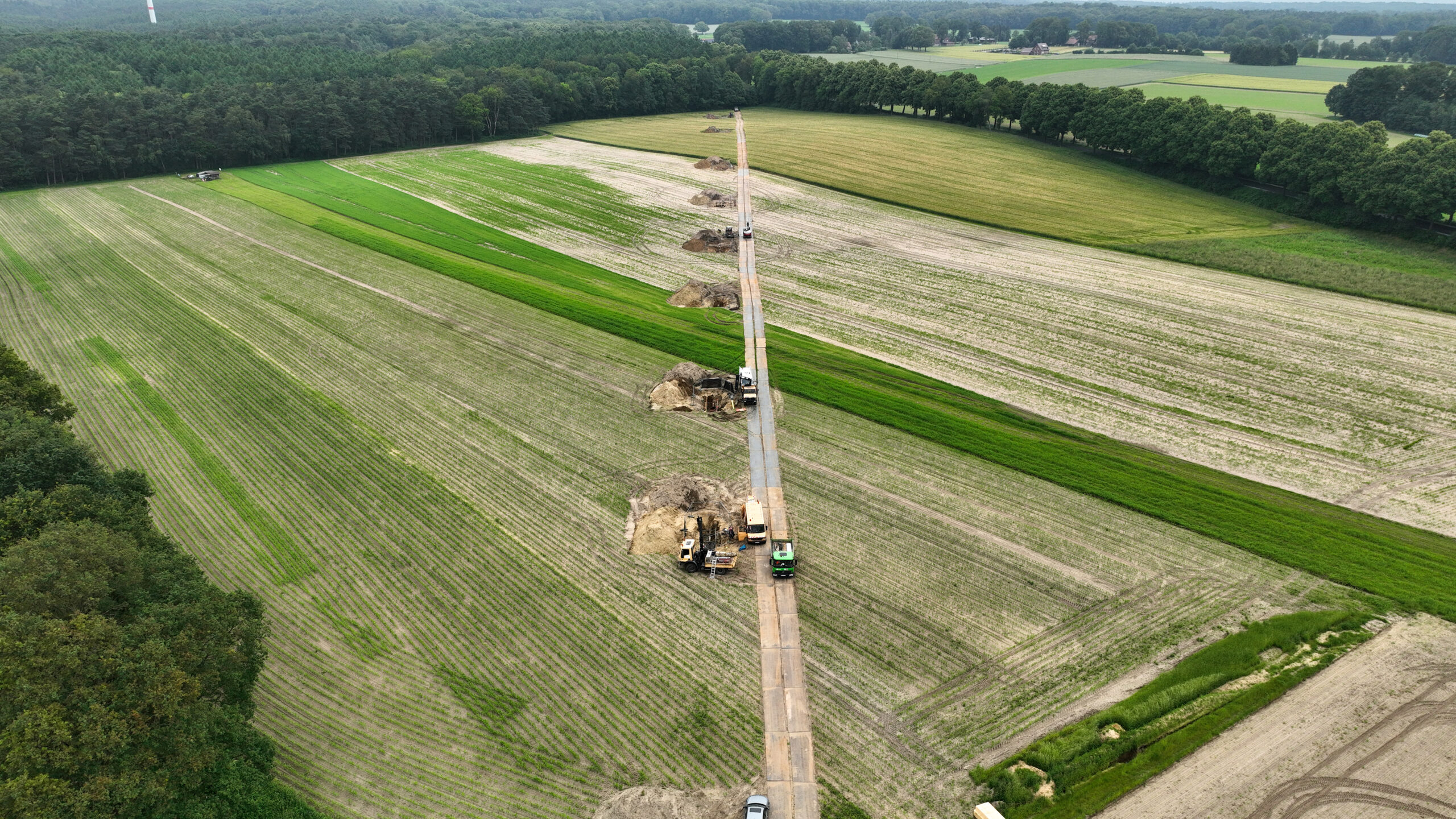
Thyssengas is constructing a cross-border hydrogen pipeline between Vlieghuis in the Netherlands and Ochtrup in the Steinfurt district of North Rhine-Westphalia, which is scheduled for completion in 2027. For this project, an existing natural gas pipeline with a length of approximately 53 kilometers will be converted for hydrogen transport. The pipeline will connect the emerging Germany-wide hydrogen network with the Dutch import ports of Amsterdam, Eemshaven, and Rotterdam, as well as the province of Zeeland with its storage facilities and planned production plants. The pipeline project is being carried out by Thyssengas as a transmission system operator and is part of the GetH2 consortium, which is jointly developing the hydrogen infrastructure in Germany. The Vlieghuis-Ochtrup hydrogen pipeline is scheduled to go into operation at the end of 2027. The border crossing point forms a central hub for cross-border hydrogen transport between Germany and the Netherlands.
Transport -
TransportSyneqt (GET H2 Nukleus)
Syneqt’s pipeline system connects the Marl Chemical Park and the Scholven refinery in North Rhine-Westphalia with the hydrogen core network. The total route comprises more than 50 kilometers of operational pipeline, 41 kilometers of which were converted from an existing natural gas pipeline to hydrogen. In addition, new sections were built, including a three-kilometer pipeline through the Marl Chemical Park and a ten-kilometer connection to the refinery in Gelsenkirchen-Scholven. The system enables the transport of up to 50,000 tons of hydrogen per year and brings climate-neutral hydrogen directly to industrial customers. The project is part of the GET H2 Nucleus initiative and was implemented by Evonik together with partners from the hydrogen value chain. The aim is to connect the climate-neutral production of green hydrogen in northern Germany with industrial customers in North Rhine-Westphalia and Lower Saxony. Syneqt completed work on the entire pipeline route from Legden via Marl to Gelsenkirchen-Scholven in just under two years of intensive project work. Six stations were included in the conversion. The pipeline strengthens the role of the Marl Chemical Park as a hydrogen hub.”

Transport -
Application, Import, Production, Storage, Transport
H2-Cluster-Heek
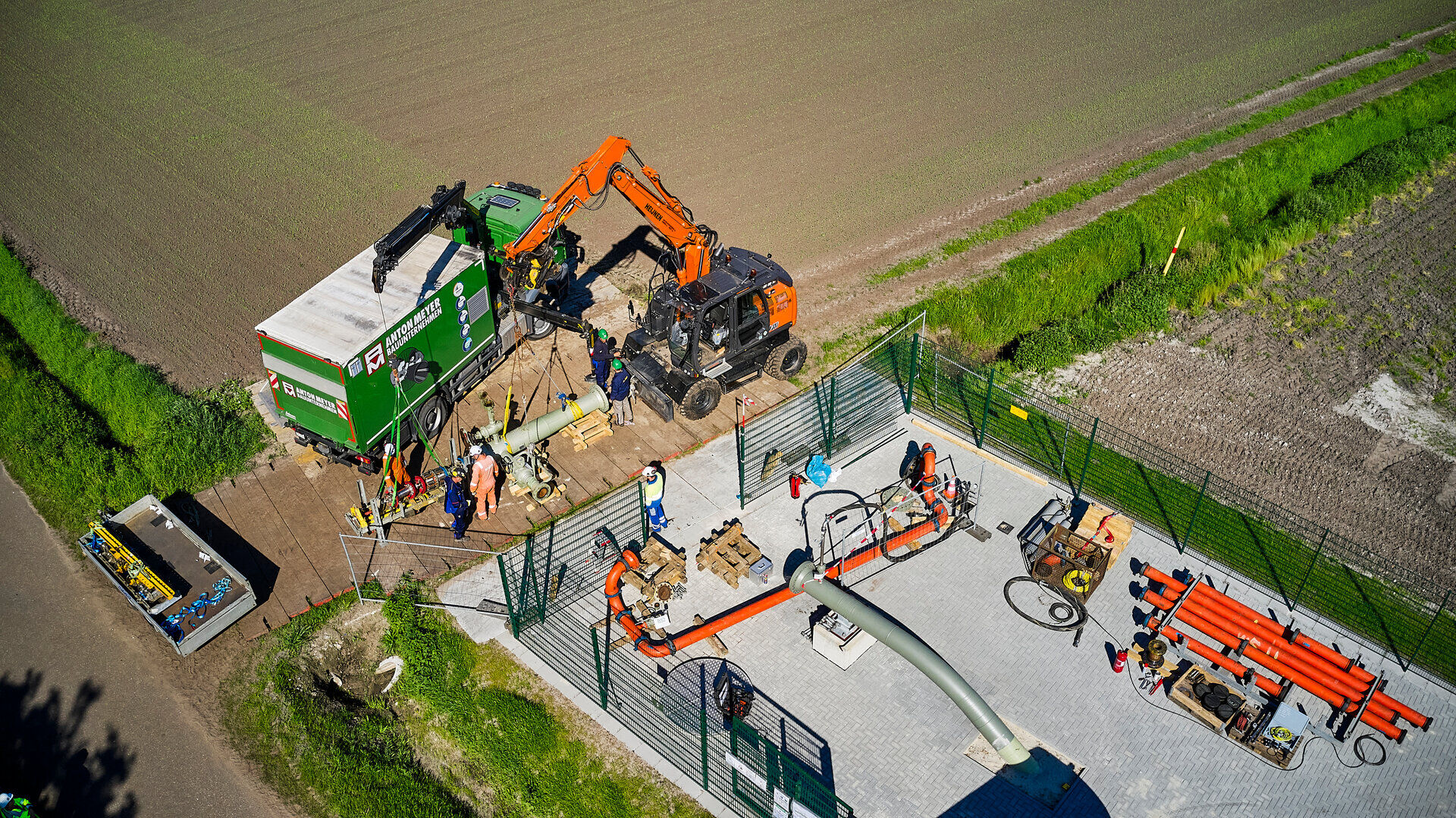
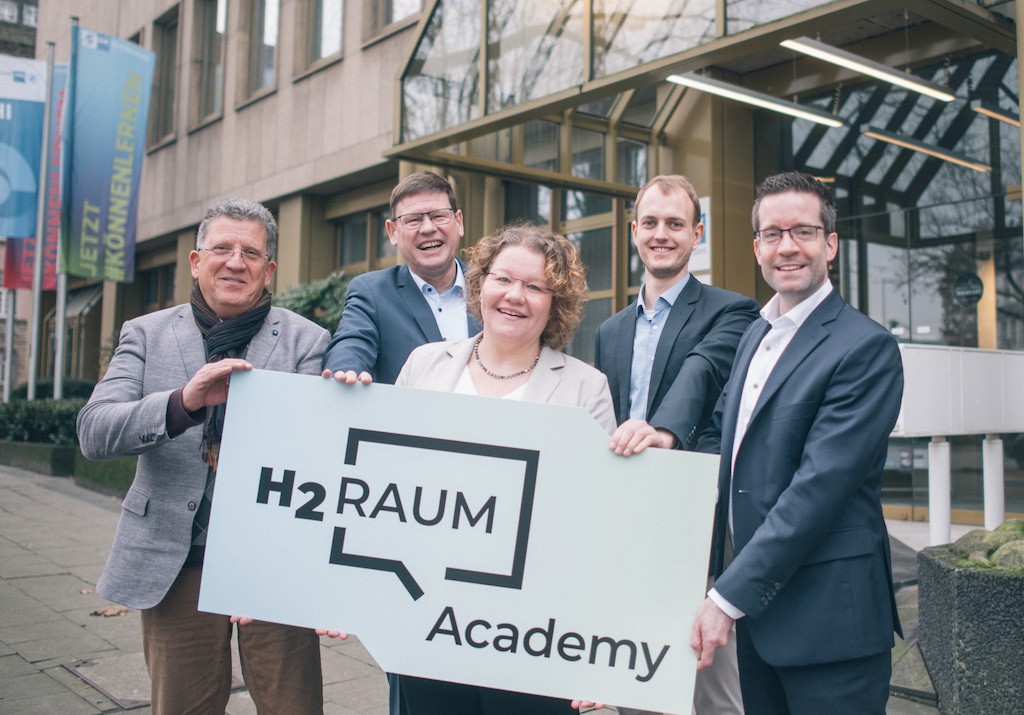
The Heek-Epe (HEP) hydrogen pipeline connects the existing pipeline number 13, which is being converted from natural gas to hydrogen transport, with the cavern field in Epe in the district of Borken in North Rhine-Westphalia. The new pipeline has a total length of 11 kilometers and a design pressure of 70 bar. The pipeline construction will connect to RWE Gas Storage West’s first hydrogen storage facility in Epe, enabling large-volume hydrogen storage in caverns. The project is being implemented by OGE (Open Grid Europe) and is part of the development of the core hydrogen infrastructure in North Rhine-Westphalia. The HEP pipeline forms a central link between the supraregional hydrogen transport network and the local storage infrastructure in Epe. Once completed, it will create an important infrastructure component for the hydrogen economy in the Münsterland region, ensuring the transport and storage of hydrogen between Heek and Epe.
Application, Import, Production, Storage, Transport -
Transport
New construction hydrogen pipeline Heek-Epe (HEP)
The Heek-Epe (HEP) hydrogen pipeline connects the existing pipeline number 13, which is being converted from natural gas to hydrogen transport, with the cavern field in Epe in the district of Borken in North Rhine-Westphalia. The new pipeline has a total length of 11 kilometers and a design pressure of 70 bar. The pipeline construction will connect to RWE Gas Storage West’s first hydrogen storage facility in Epe, enabling large-volume hydrogen storage in caverns. The project is being implemented by OGE (Open Grid Europe) and is part of the development of the core hydrogen infrastructure in North Rhine-Westphalia. The HEP pipeline forms a central link between the supraregional hydrogen transport network and the local storage infrastructure in Epe. Once completed, it will create an important infrastructure component for the hydrogen economy in the Münsterland region, ensuring the transport and storage of hydrogen between Heek and Epe.
Transport -
ApplicationH2!Academy
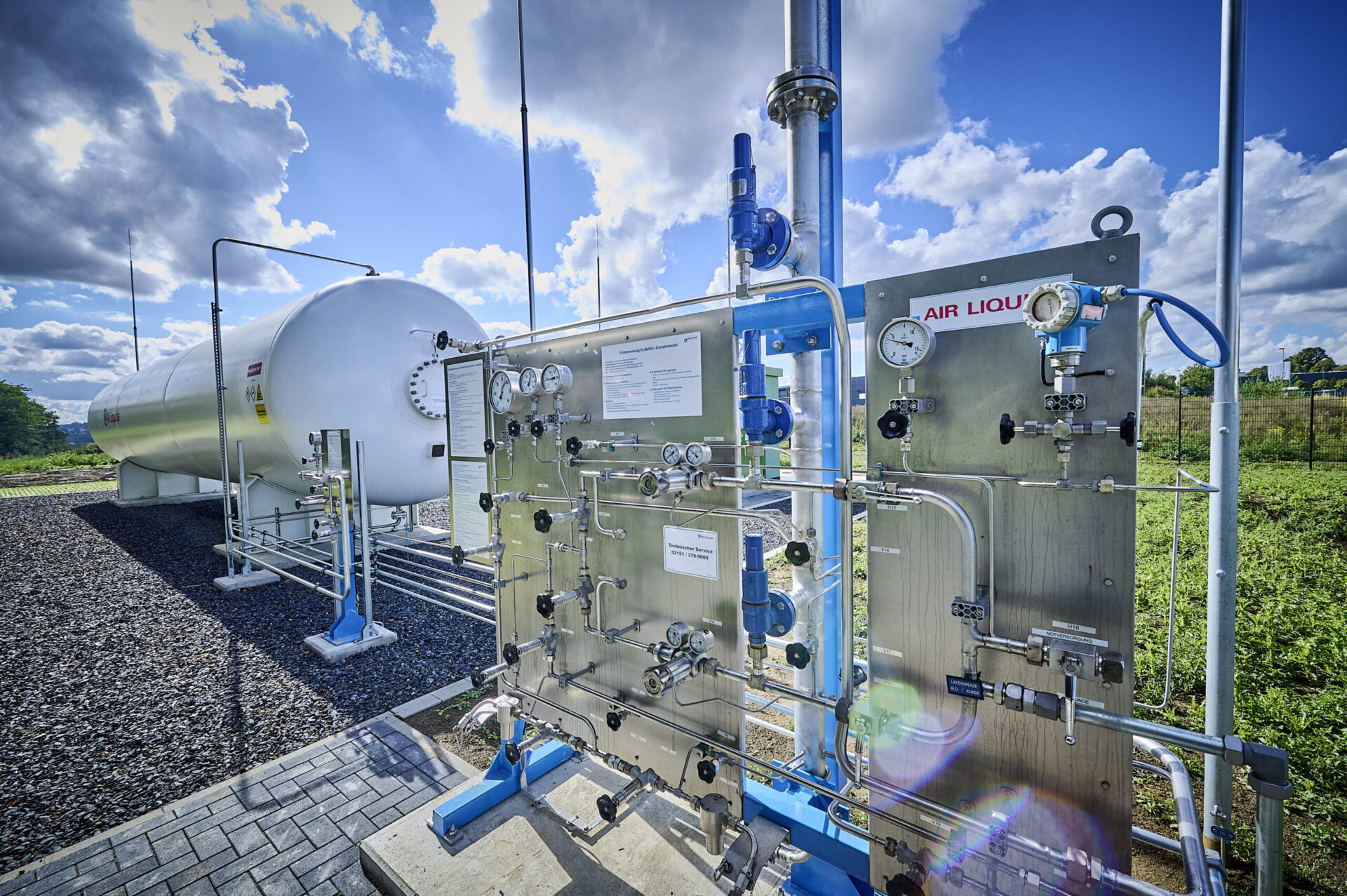
The H2!Academy develops practice-oriented training programs for hydrogen transformation in the Emscher-Lippe region at the IHK location in Gelsenkirchen. The educational project is aimed at small and medium-sized enterprises and identifies their training needs through surveys and expert interviews. On this basis, a hydrogen competence model is being developed, which is being tested and further developed in pilot courses. The North Westphalia Chamber of Industry and Commerce is the project sponsor of the H2!Academy. The Federal Ministry of Education and Research is funding the project over a period of three years. The project is currently in the pilot phase at the Chamber of Industry and Commerce in Gelsenkirchen. The high level of company participation in expert interviews and transfer events demonstrates the need for hydrogen-related training. Increased awareness of renewable energies and hydrogen transformation is resulting in significant CO₂ savings potential.
Application -
Application, Import, TransportH2HoWi
The H2 Howi project in Holzwickede, North Rhine-Westphalia, is testing the conversion of existing natural gas pipelines to transport 100 percent hydrogen. The goal is to demonstrate the technical feasibility and legal framework for such a conversion for the first time in Germany, thereby enabling a green application for the existing natural gas network. The project focuses on demonstrating in practice that the existing gas infrastructure in Holzwickede is suitable for transporting pure hydrogen and can thus contribute to the decarbonization of the energy supply. The project is being carried out by Westenergie and is continuously monitored by scientists. The scientific monitoring documents all technical and regulatory findings that are relevant for future hydrogen projects in the gas network. The H2 Howi project is playing a pioneering role in the development of the hydrogen economy in Germany. The H2 Howi project was commissioned in October 2022. The project is scheduled to run until December 2026 in order to gain comprehensive long-term experience with the operation of hydrogen in converted natural gas pipelines. The data and findings obtained will serve as the basis for the large-scale transformation of the gas infrastructure in North Rhine-Westphalia and nationwide.
Application, Import, Transport
H2 Pipeline Vlieghuis-Ochtrup
Syneqt (GET H2 Nukleus)
H2-Cluster-Heek
New construction hydrogen pipeline Heek-Epe (HEP)
H2!Academy