Erzeugung
und Import
Donec pede justo, fringilla vel, aliquet nec, vulputate eget, arcu. In enim justo, rhoncus ut, imperdiet a, venenatis vitae, justo.
Donec pede justo, fringilla vel, aliquet nec, vulputate eget, arcu. In enim justo, rhoncus ut, imperdiet a, venenatis vitae, justo. Nullam dictum felis eu pede mollis pretium. Integer tincidunt. Cras dapibus. Vivamus elementum semper nisi. Aenean vulputate eleifend tellus.
Studien
Studien

Projekte
-
 Transport
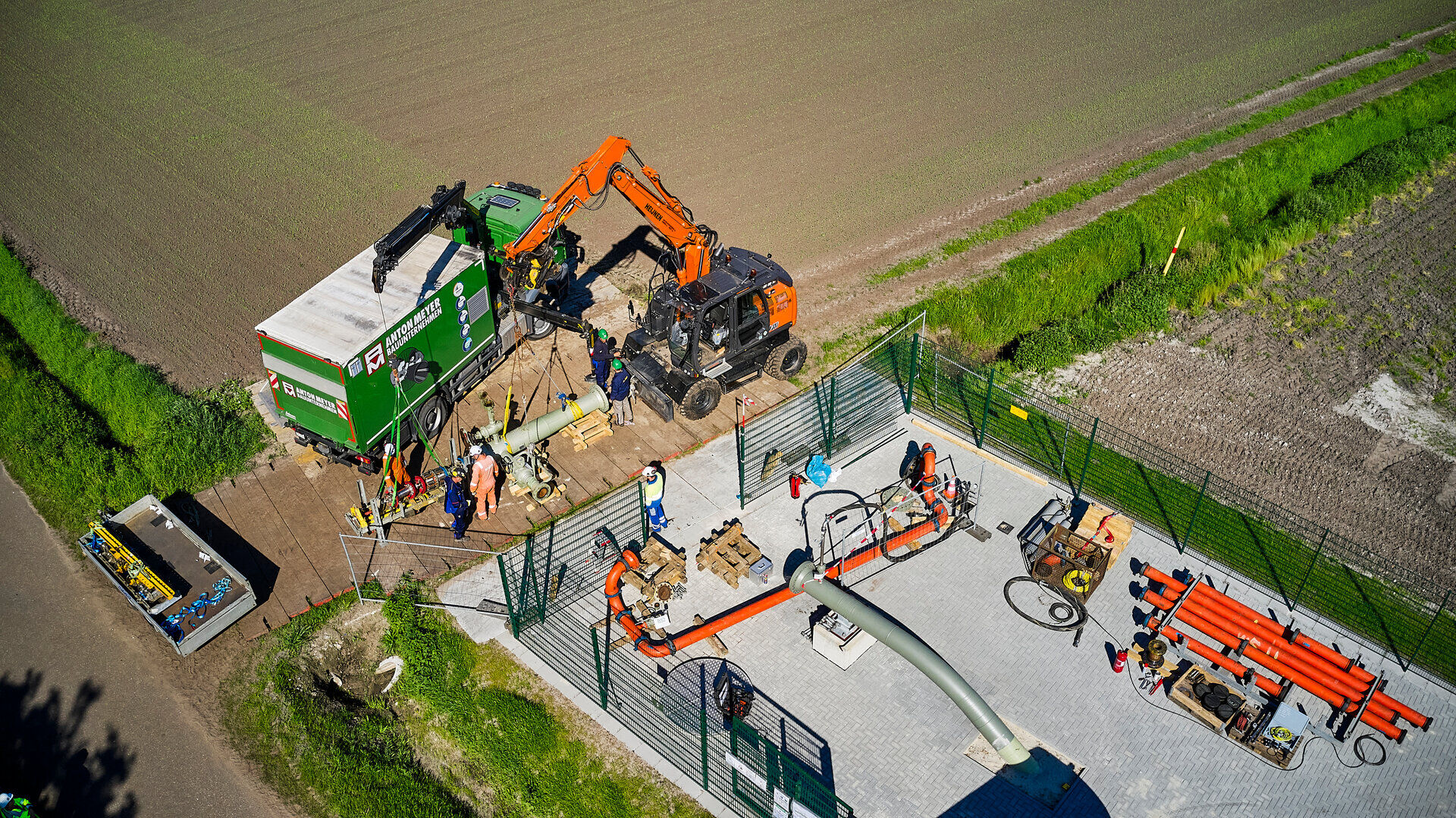
H2 Pipeline Vlieghuis-Ochtrup
Thyssengas is constructing a cross-border hydrogen pipeline between Vlieghuis in the Netherlands and Ochtrup in the Steinfurt district of North Rhine-Westphalia, which is scheduled for completion in 2027. For this project, an existing natural gas pipeline with a length of approximately 53 kilometers will be converted for hydrogen transport. The pipeline will connect the emerging Germany-wide hydrogen network with the Dutch import ports of Amsterdam, Eemshaven, and Rotterdam, as well as the province of Zeeland with its storage facilities and planned production plants. The pipeline project is being carried out by Thyssengas as a transmission system operator and is part of the GetH2 consortium, which is jointly developing the hydrogen infrastructure in Germany. The Vlieghuis-Ochtrup hydrogen pipeline is scheduled to go into operation at the end of 2027. The border crossing point forms a central hub for cross-border hydrogen transport between Germany and the Netherlands.
Transport -
 Transport
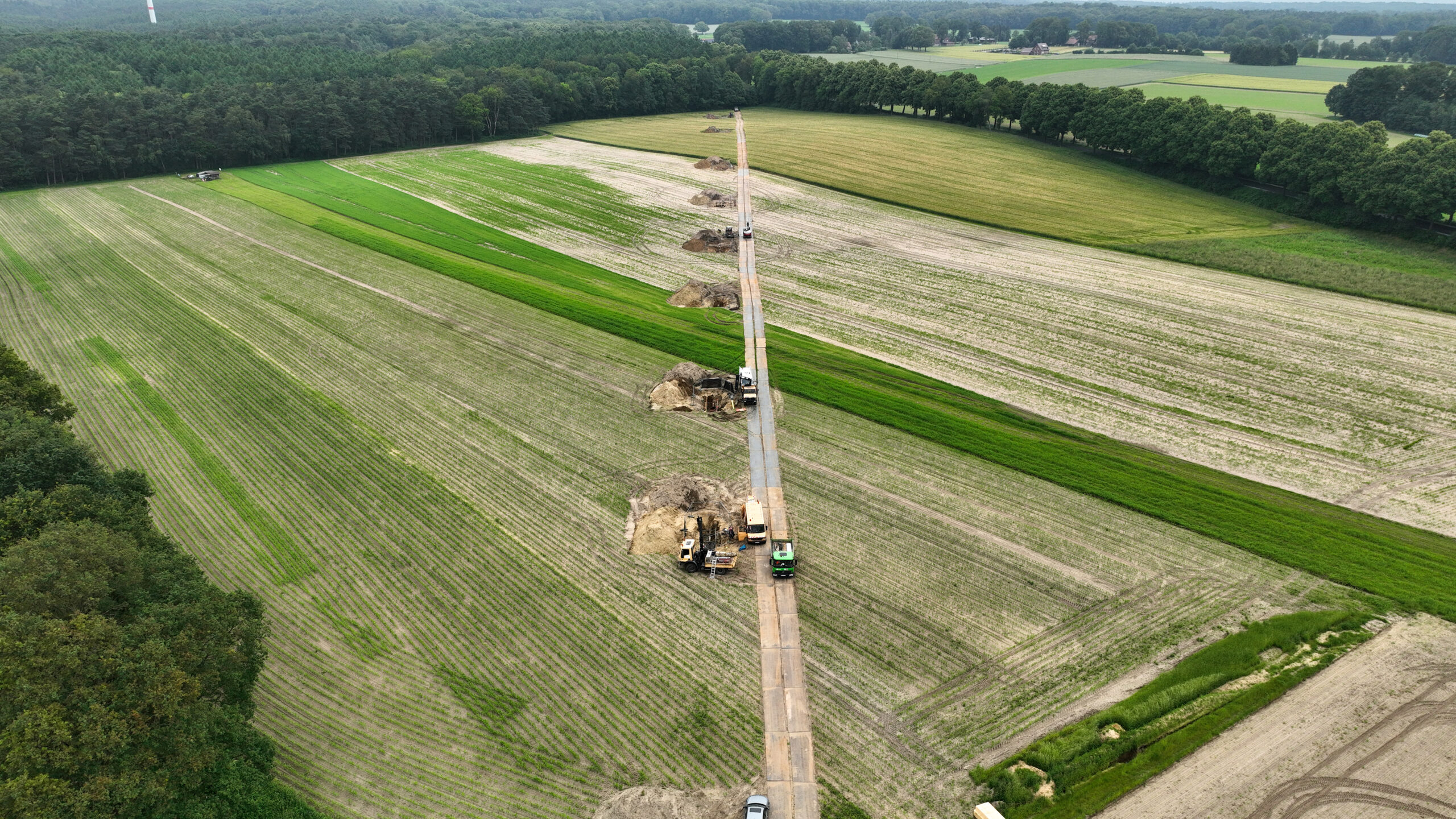
Syneqt (GET H2 Nukleus)
Syneqt’s pipeline system connects the Marl Chemical Park and the Scholven refinery in North Rhine-Westphalia with the hydrogen core network. The total route comprises more than 50 kilometers of operational pipeline, 41 kilometers of which were converted from an existing natural gas pipeline to hydrogen. In addition, new sections were built, including a three-kilometer pipeline through the Marl Chemical Park and a ten-kilometer connection to the refinery in Gelsenkirchen-Scholven. The system enables the transport of up to 50,000 tons of hydrogen per year and brings climate-neutral hydrogen directly to industrial customers. The project is part of the GET H2 Nucleus initiative and was implemented by Evonik together with partners from the hydrogen value chain. The aim is to connect the climate-neutral production of green hydrogen in northern Germany with industrial customers in North Rhine-Westphalia and Lower Saxony. Syneqt completed work on the entire pipeline route from Legden via Marl to Gelsenkirchen-Scholven in just under two years of intensive project work. Six stations were included in the conversion. The pipeline strengthens the role of the Marl Chemical Park as a hydrogen hub.”
Transport -
 Application
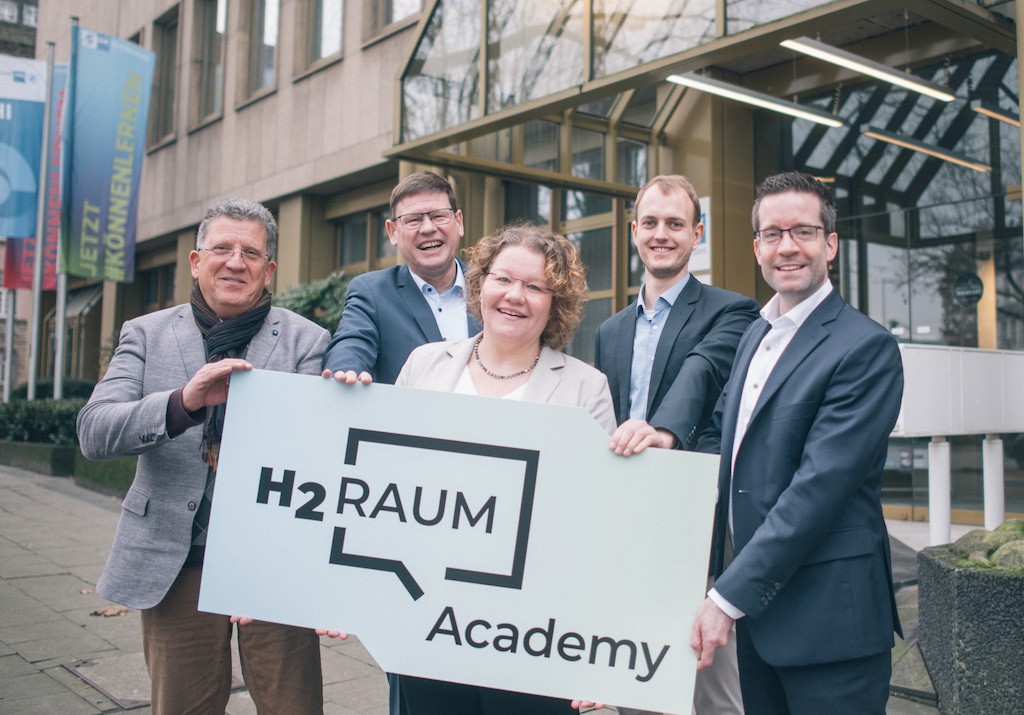
H2!Academy
The H2!Academy develops practice-oriented training programs for hydrogen transformation in the Emscher-Lippe region at the IHK location in Gelsenkirchen. The educational project is aimed at small and medium-sized enterprises and identifies their training needs through surveys and expert interviews. On this basis, a hydrogen competence model is being developed, which is being tested and further developed in pilot courses. The North Westphalia Chamber of Industry and Commerce is the project sponsor of the H2!Academy. The Federal Ministry of Education and Research is funding the project over a period of three years. The project is currently in the pilot phase at the Chamber of Industry and Commerce in Gelsenkirchen. The high level of company participation in expert interviews and transfer events demonstrates the need for hydrogen-related training. Increased awareness of renewable energies and hydrogen transformation is resulting in significant CO₂ savings potential.
Application -
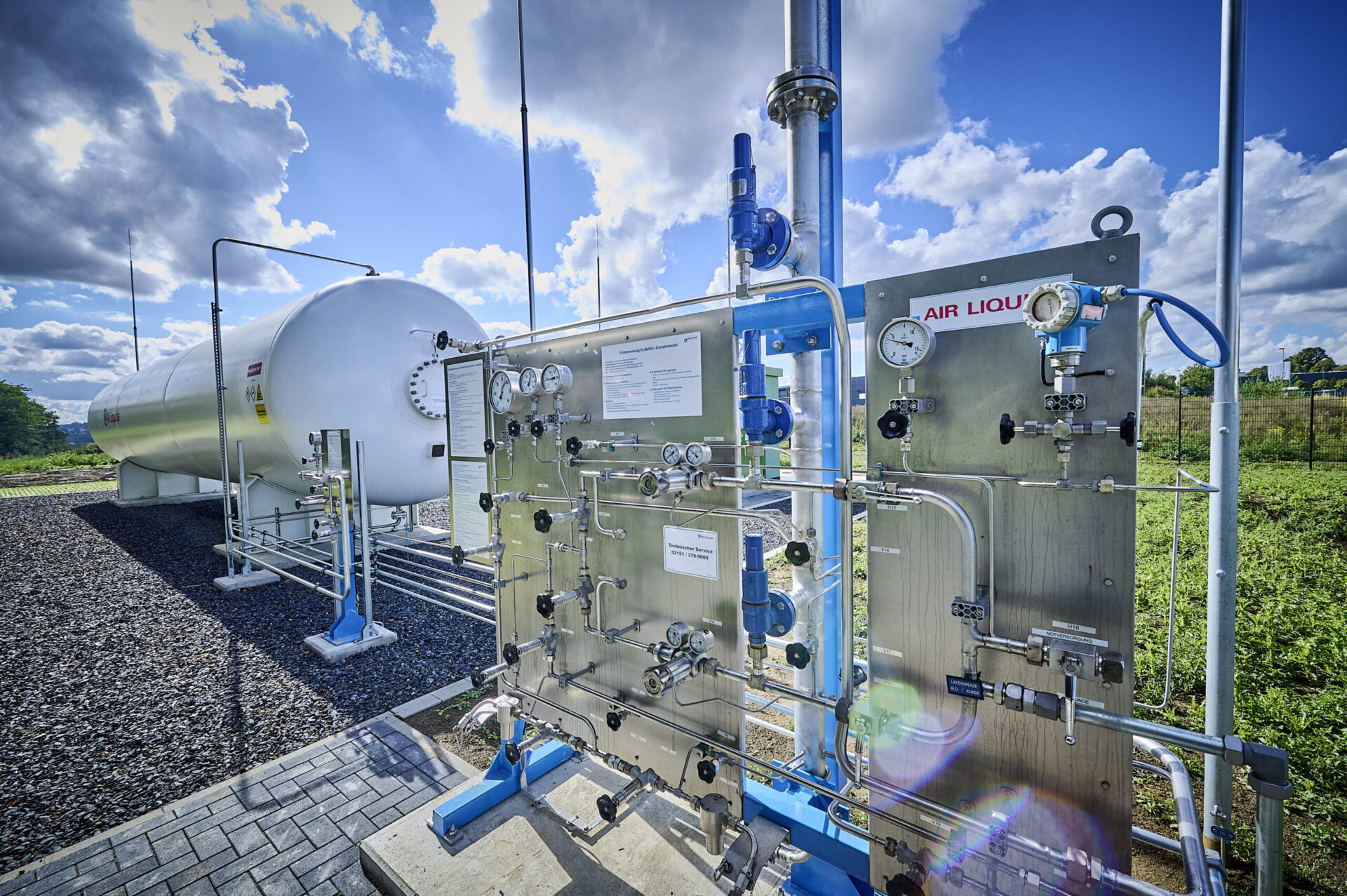 Application, Import, Transport
H2HoWi
The H2 Howi project in Holzwickede, North Rhine-Westphalia, is testing the conversion of existing natural gas pipelines to transport 100 percent hydrogen. The goal is to demonstrate the technical feasibility and legal framework for such a conversion for the first time in Germany, thereby enabling a green application for the existing natural gas network. The project focuses on demonstrating in practice that the existing gas infrastructure in Holzwickede is suitable for transporting pure hydrogen and can thus contribute to the decarbonization of the energy supply. The project is being carried out by Westenergie and is continuously monitored by scientists. The scientific monitoring documents all technical and regulatory findings that are relevant for future hydrogen projects in the gas network. The H2 Howi project is playing a pioneering role in the development of the hydrogen economy in Germany. The H2 Howi project was commissioned in October 2022. The project is scheduled to run until December 2026 in order to gain comprehensive long-term experience with the operation of hydrogen in converted natural gas pipelines. The data and findings obtained will serve as the basis for the large-scale transformation of the gas infrastructure in North Rhine-Westphalia and nationwide.
Application, Import, Transport
Transport
H2 Pipeline Vlieghuis-Ochtrup
Thyssengas is constructing a cross-border hydrogen pipeline between Vlieghuis in the Netherlands and Ochtrup in the Steinfurt district of North Rhine-Westphalia, which is scheduled for completion in 2027. For this project, an existing natural gas pipeline with a length of approximately 53 kilometers will be converted for hydrogen transport. The pipeline will connect the emerging Germany-wide hydrogen network with the Dutch import ports of Amsterdam, Eemshaven, and Rotterdam, as well as the province of Zeeland with its storage facilities and planned production plants.
The pipeline project is being carried out by Thyssengas as a transmission system operator and is part of the GetH2 consortium, which is jointly developing the hydrogen infrastructure in Germany.
The Vlieghuis-Ochtrup hydrogen pipeline is scheduled to go into operation at the end of 2027. The border crossing point forms a central hub for cross-border hydrogen transport between Germany and the Netherlands.
Transport
Syneqt (GET H2 Nukleus)
Syneqt's pipeline system connects the Marl Chemical Park and the Scholven refinery in North Rhine-Westphalia with the hydrogen core network. The total route comprises more than 50 kilometers of operational pipeline, 41 kilometers of which were converted from an existing natural gas pipeline to hydrogen. In addition, new sections were built, including a three-kilometer pipeline through the Marl Chemical Park and a ten-kilometer connection to the refinery in Gelsenkirchen-Scholven. The system enables the transport of up to 50,000 tons of hydrogen per year and brings climate-neutral hydrogen directly to industrial customers.
The project is part of the GET H2 Nucleus initiative and was implemented by Evonik together with partners from the hydrogen value chain. The aim is to connect the climate-neutral production of green hydrogen in northern Germany with industrial customers in North Rhine-Westphalia and Lower Saxony.
Syneqt completed work on the entire pipeline route from Legden via Marl to Gelsenkirchen-Scholven in just under two years of intensive project work. Six stations were included in the conversion. The pipeline strengthens the role of the Marl Chemical Park as a hydrogen hub."
Application
H2!Academy
The H2!Academy develops practice-oriented training programs for hydrogen transformation in the Emscher-Lippe region at the IHK location in Gelsenkirchen. The educational project is aimed at small and medium-sized enterprises and identifies their training needs through surveys and expert interviews. On this basis, a hydrogen competence model is being developed, which is being tested and further developed in pilot courses.
The North Westphalia Chamber of Industry and Commerce is the project sponsor of the H2!Academy. The Federal Ministry of Education and Research is funding the project over a period of three years.
The project is currently in the pilot phase at the Chamber of Industry and Commerce in Gelsenkirchen. The high level of company participation in expert interviews and transfer events demonstrates the need for hydrogen-related training. Increased awareness of renewable energies and hydrogen transformation is resulting in significant CO₂ savings potential.
Application
H2HoWi
The H2 Howi project in Holzwickede, North Rhine-Westphalia, is testing the conversion of existing natural gas pipelines to transport 100 percent hydrogen. The goal is to demonstrate the technical feasibility and legal framework for such a conversion for the first time in Germany, thereby enabling a green application for the existing natural gas network. The project focuses on demonstrating in practice that the existing gas infrastructure in Holzwickede is suitable for transporting pure hydrogen and can thus contribute to the decarbonization of the energy supply.
The project is being carried out by Westenergie and is continuously monitored by scientists. The scientific monitoring documents all technical and regulatory findings that are relevant for future hydrogen projects in the gas network. The H2 Howi project is playing a pioneering role in the development of the hydrogen economy in Germany.
The H2 Howi project was commissioned in October 2022. The project is scheduled to run until December 2026 in order to gain comprehensive long-term experience with the operation of hydrogen in converted natural gas pipelines. The data and findings obtained will serve as the basis for the large-scale transformation of the gas infrastructure in North Rhine-Westphalia and nationwide.